Just as we simmer broth or grill fish, we see coffee as food whose flavor is completed by understanding the ingredient and cooking it with the right heat.
Roasting Coffee as FoodMedium Roast · Hwasik 火食
I — Roasting
What roasting does
What Roasting Does
Roasting is, quite literally, the act of heating beans. Green coffee holds varied aroma and flavor according to the conditions of its region, its environment and how it was processed. The flavors and aromas of coffee do not yet exist in the raw bean.
Roasting creates the flavor and aroma unique to coffee through chemical reactions driven by heat, and expands the bean’s structure so those compounds extract well into water.
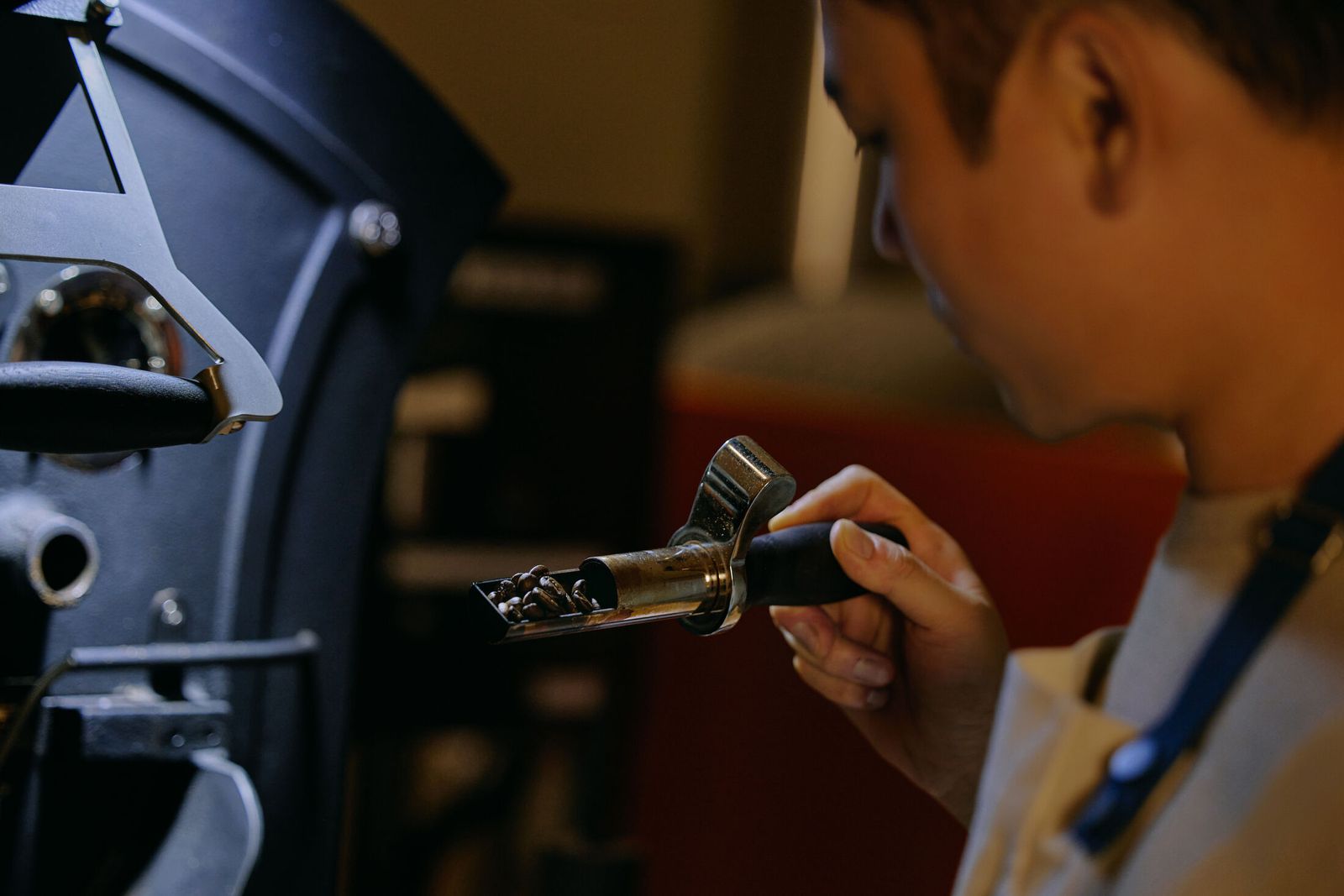
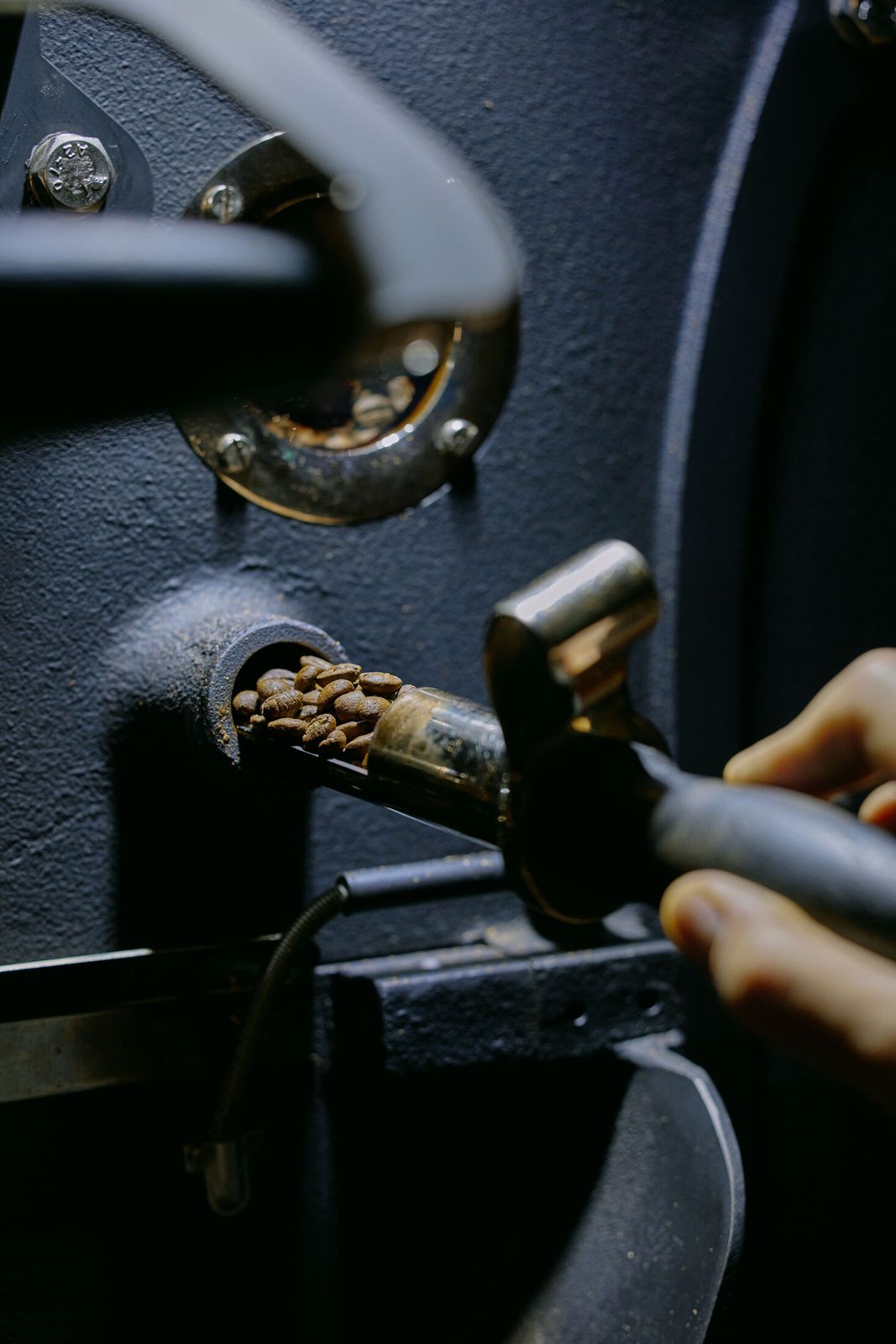
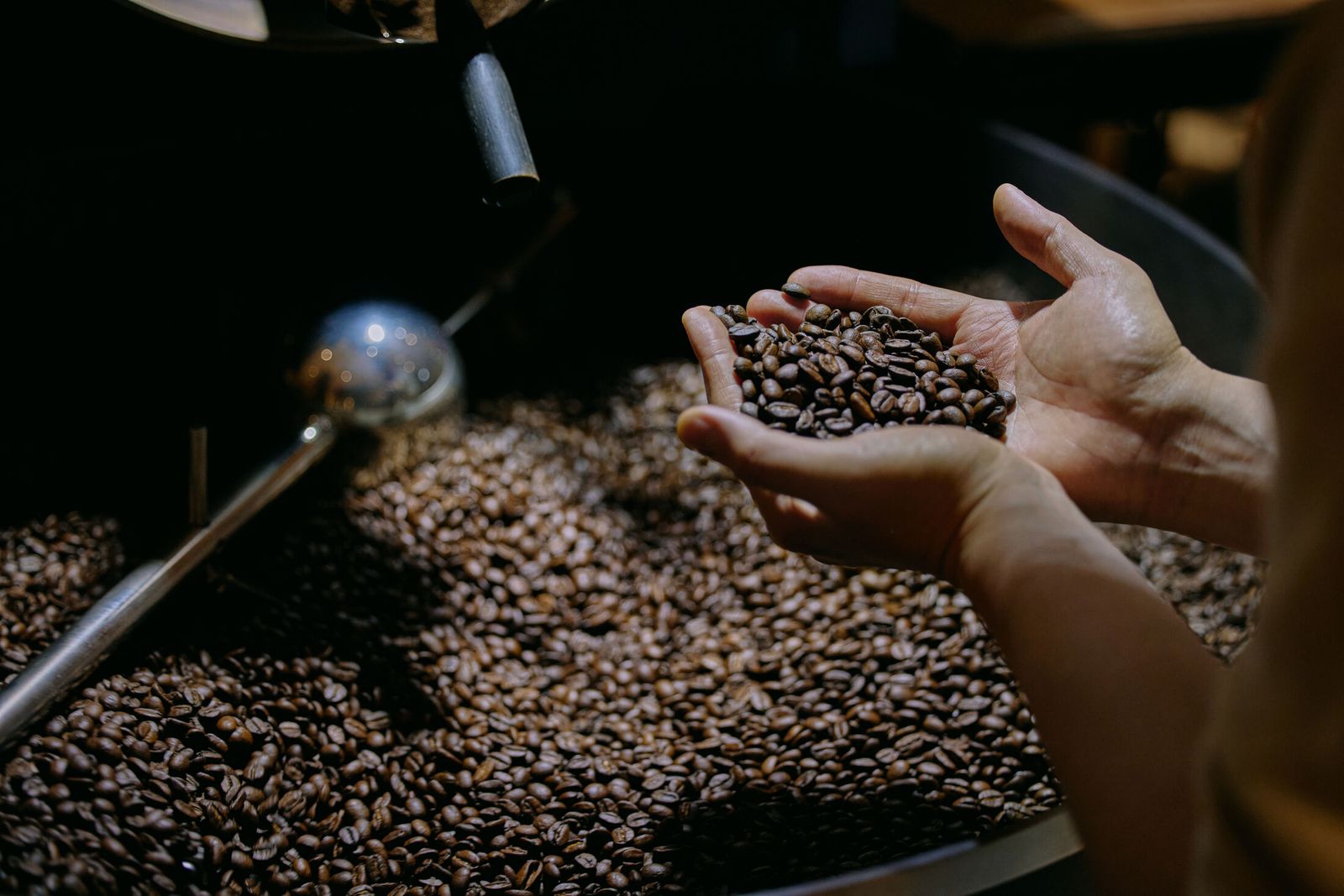
01Reading the beans mid-roast with the trier.
Beans are the ingredient for brewing, and roasting decides the nature of that ingredient.
The potential of green coffee is set at the growing and processing stage, but deciding which flavor and aroma that potential blooms into — and giving it the color of the brand — is the roaster’s work.
II — Aim
What we roast for
What We Roast For
Roasting at Pomellow Bean has two directions. The first is to realise Korean coffee consistently; the second is to make coffee anyone can enjoy easily.
Roasting talk usually centres on the expression of character, the level of acidity and sweetness. To that we add good sweetness, and the density that comes from sufficient extraction of the bean’s compounds.
The tone we pursue, density, is a concept that appears when coffee is extracted strongly and well. Density belongs more to brewing, but the roaster is the one who builds the structure for it.
Origin
Origin information is important for answering a guest’s curiosity. Still, we draw the aroma and flavor we want by bringing out the character of the bean itself.
III — Hwasik
Hwasik (火食), heat learned from food
What Food Taught Us About Heat
Pomellow Bean sees coffee from the viewpoint of hwasik — food whose flavor fire completes.
The deep broth of gomtang boiled in a heavy iron pot that has taken in enough heat. The chewy surface of fish grilled over a blazing oven, and the richness that follows on the tongue.
So we heat the roaster thoroughly, store plenty of heat, and pass that heat generously to the beans.
The Cup
Clear character, rich sweetness, a texture that fills the mouth. This is the coffee Pomellow Bean works to complete through handling heat.
IV — Medium
Medium roast
Medium Roasting
For all of these aims, Pomellow Bean takes medium roast as its standard. Even at the same medium, the heat source — direct flame or convection — and the way heat is applied change the result.
The medium roast we speak of respects the current of modern specialty coffee while finding the balance point that suits Korean sensibilities best.
It brings the bean’s individuality out clearly, while sufficient chemical change draws out sweetness, a full mouthfeel and nutty warmth reliably.
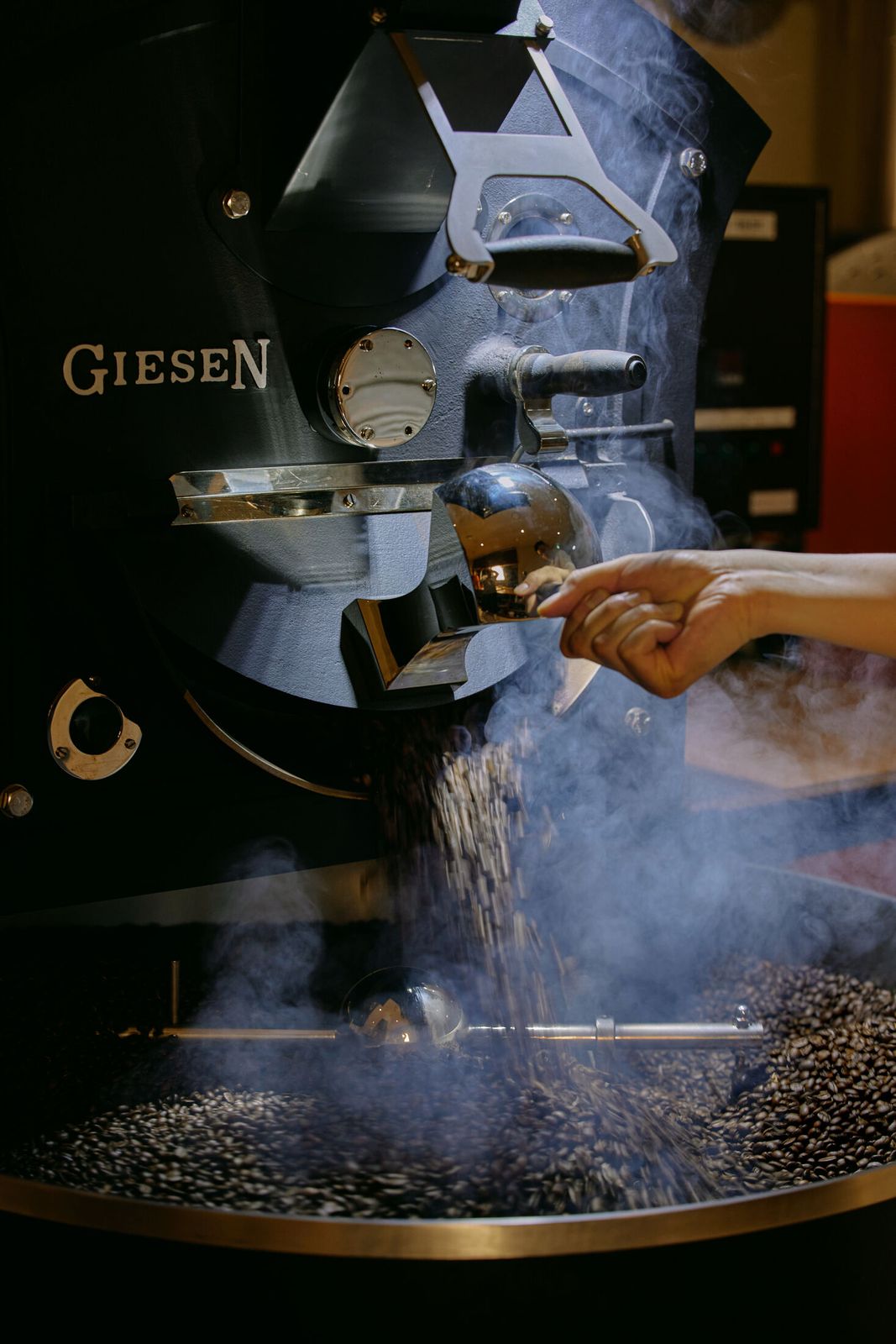
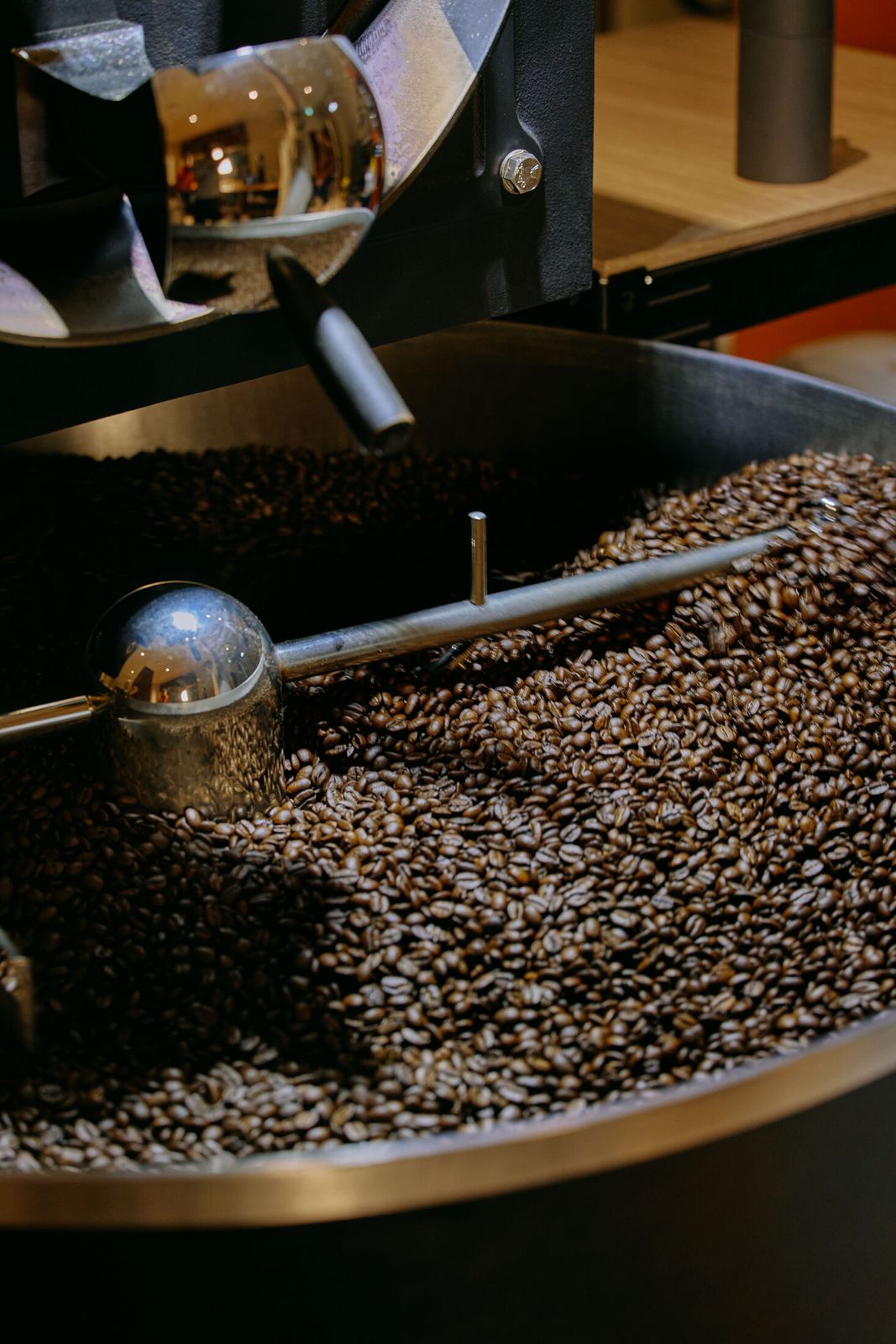
02Freshly roasted, cooling in the tray.
Sweet Spot
We see medium roast as widening coffee’s sweet spot — the range where it tastes best — more than light or dark roast does.
V — The Question
The beans change; the question stays the same
The floral aroma of a gesha that spreads before the cup is lifted, the tropical fruit of an anaerobic fermentation that bursts at the tip of the tongue. Specialty coffee has opened new possibilities.
And yet we wonder what flavor appears when that bean is given enough heat. Fruit reduces like jam, and beneath the flowers a honeyed depth settles.
“How do we cook this properly?”
VI — Seasons
Consistency across four seasons
Consistency Through Four Seasons
Our work toward consistency is also a constant conversation with Korea’s distinct four seasons.
Large swings in annual and daily temperature, and unpredictable humidity and pressure, affect every part of roasting. Cold, dry green coffee in winter and the opposite in summer change how heat behaves.
WinterWinter
SummerSummer
Green
Cold, dry green coffee
Hot, humid green coffee
Air
Cold, dry air
Hot, humid air
Roaster
Heat efficiency and exhaust differ by season
Goal
The same roast
Records
So we record every roast and read those records to handle the variables. Rather than holding the same numbers, we aim for the same roast in any season.
Bringing in good green coffee steadily, and repeating the study that matches its condition each time the season turns. The satisfaction of a daily cup starts there.
Taste
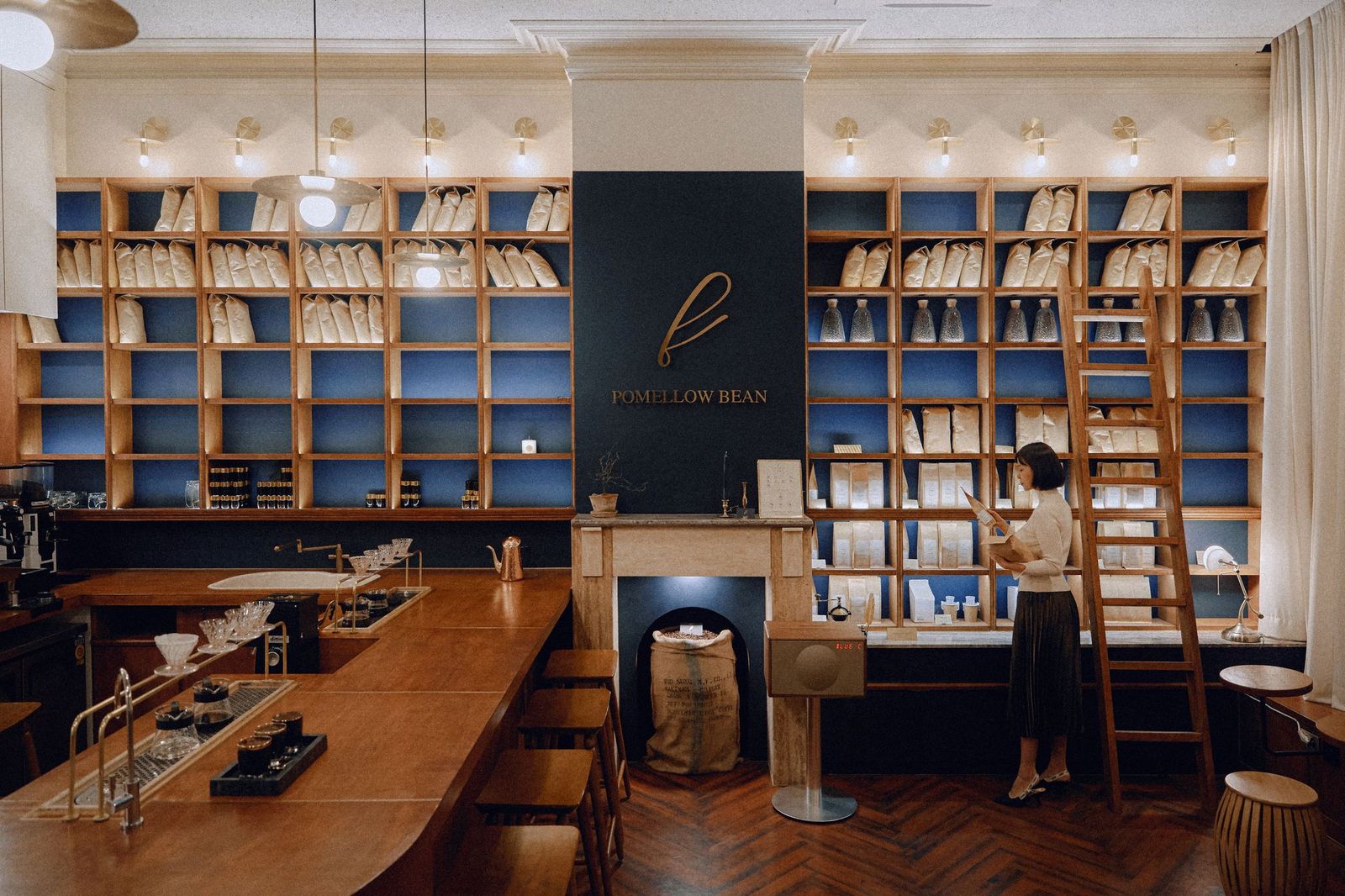
Tasting at the shop
Taste It at Gongdeok
At Gongdeok you can choose three espresso blends, seven drip single origins and one decaf. A different single origin is also featured each week.
Of the eight drip single origins and decafs we sell year-round, six are roasted medium or medium dark. Arranged from lower to higher acidity, so you can choose by taste.